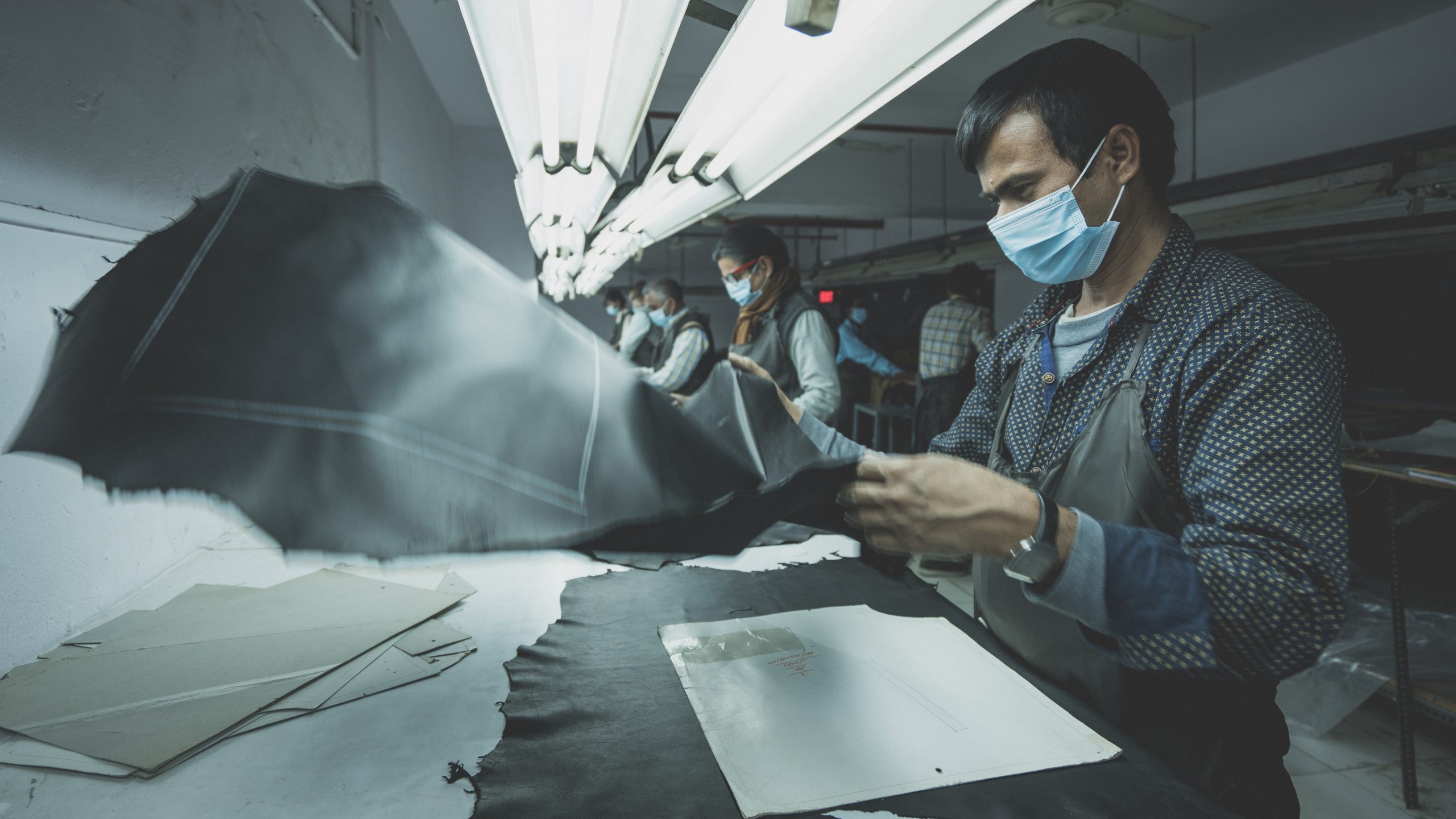
When we describe INTEX as a vertically integrated leather house, we mean something very specific: every stage of the process, from procuring the raw skin to delivering the finished product, is managed by our own team. No subcontractors. No opacity. No surprises.
Why it starts at the farm
The quality of a finished leather garment is determined long before it enters the tannery. The breed of animal, its diet, the climate, how the hide was handled after slaughter — all of this affects the final material. By sourcing directly from selected farms and assigning each skin an individual passport, we know exactly what we are working with from day one.
The tannery as the backbone
Our LWG Gold certified tannery in Chennai is where raw hides are transformed into the leathers our clients specify. Having our own facility means we control the chemistry, the timing, the finishing — and we are not at the mercy of a third-party tannery’s schedule or standards.
New Delhi: where design meets production
Once tanned, skins travel to our New Delhi factory where the garments and accessories are made. Because both facilities are ours, the production team has a direct relationship with the tannery. If a batch needs adjustment, the conversation happens the same day.
The result: samples that match production
One of the most persistent frustrations in fashion manufacturing is the gap between the approved sample and the production run. Our vertical model closes that gap. Because we stock approximately 300,000 skins at any given time and process our own tanning, production is made from the same skins as the sample — not a different batch ordered months later.
This is what vertical integration actually means in practice: not a marketing claim, but a manufacturing reality.